
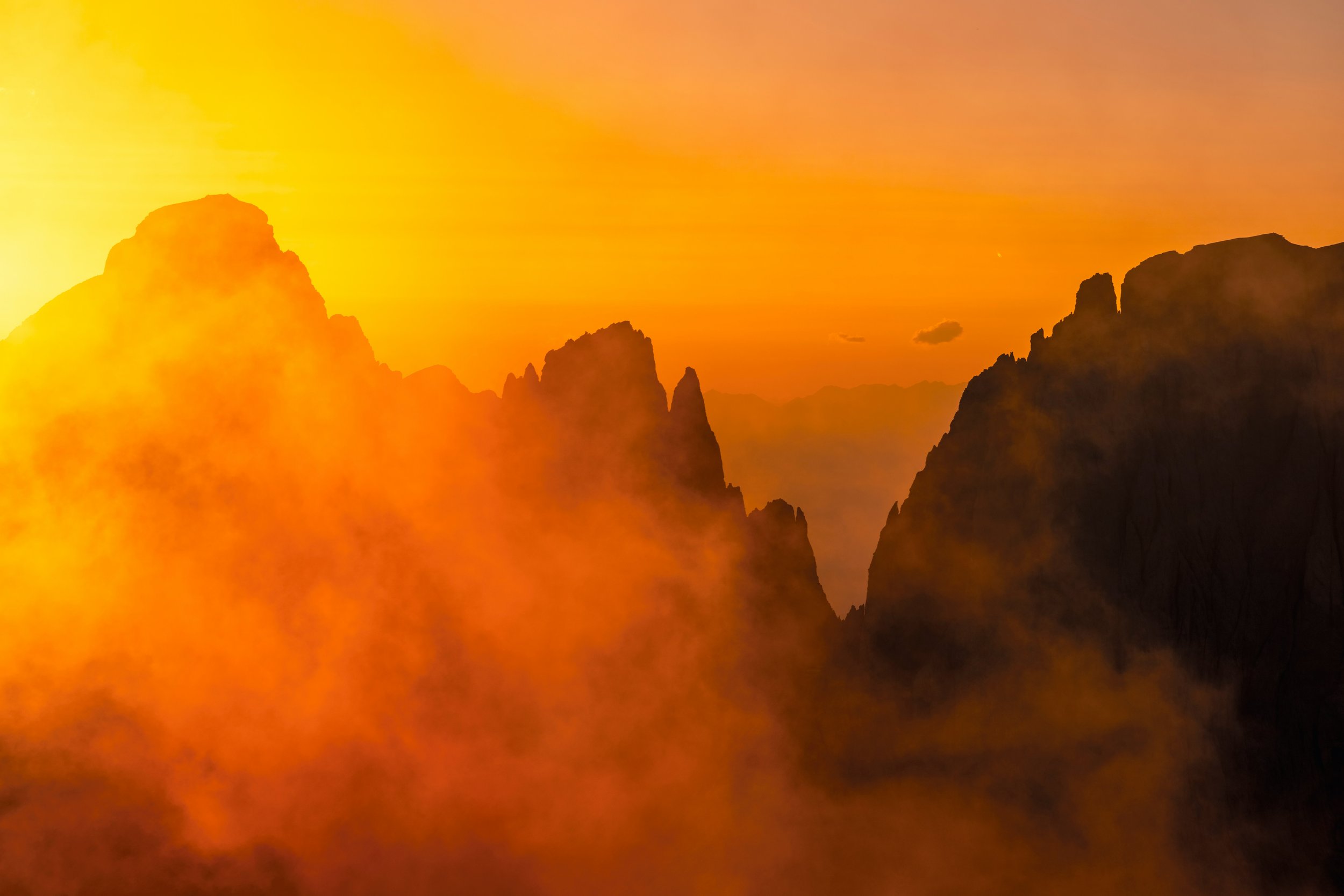
Why Do Some Leadership Retreats Transform Organizations While Others Feel Like Meetings in a Different Location?
The most successful corporate retreats are rarely remembered for their agendas. They are remembered for the conversations, clarity, and connections that emerged because the environment made them possible. Jackson Hole has quietly become one of America’s most compelling destinations for leadership teams seeking perspective beyond the conference room.
There is a particular moment that often occurs during a well-designed leadership retreat.
It rarely happens during a presentation.
It almost never happens in a conference room.
More often, it arrives unexpectedly.
A conversation continues after dinner. Two executives finally discuss an issue they have been circling around for months. A founder gains clarity on a decision that had felt impossible back at the office. A leadership team discovers that the challenge they believed was operational is actually relational.
The breakthrough appears spontaneous.
Yet it usually is not.
It is the result of environment.
The setting changed. The pace changed. The noise diminished. The people involved were given enough distance from daily responsibilities to think differently.
This is the often-overlooked purpose of a luxury corporate retreat.
It is not a reward.
It is not simply a gathering.
At its highest level, it is an intentional environment designed to create better conversations.
Jackson Hole has become one of the most effective places in North America for precisely this reason.
What Is a Luxury Corporate Retreat?
The phrase is frequently misunderstood.
Many people hear “corporate retreat” and imagine a packed schedule of presentations, workshops, team-building exercises, and networking events.
Others picture a luxury resort where business discussions happen intermittently between recreational activities.
Both approaches can be valuable.
Neither fully captures what makes a retreat transformative.
A luxury corporate retreat is not defined by accommodations, transportation, or amenities, although those things certainly matter.
Its defining characteristic is intentionality.
The environment is designed to create conditions where meaningful thinking, meaningful conversation, and meaningful relationships can emerge.
This distinction is important.
Organizations often spend tremendous resources improving systems, processes, and strategies.
Far fewer invest with equal intention in improving perspective.
Yet many of the most consequential decisions in business arise from perspective rather than information.
Information is abundant.
Perspective is rare.
Why Jackson Hole Has Become a Destination for Leadership Teams
The geography itself provides part of the answer.
Jackson Hole sits within one of the most dramatic landscapes in North America. The Tetons rise abruptly from the valley floor. Wildlife moves through the region in remarkable abundance. Rivers, forests, mountains, and open spaces create a sense of scale that is increasingly difficult to find in modern life.
The environment naturally creates distance from routine.
Distance is often misunderstood.
Most executives do not need distance from work itself.
They need distance from constant reaction.
Leadership today involves extraordinary levels of cognitive demand. Decisions arrive continuously. Communication never fully stops. The pace of business rarely allows sustained reflection.
The result is that many leaders spend their time responding rather than thinking.
Jackson Hole offers an antidote.
The landscape slows people down.
Not artificially.
Naturally.
The environment invites observation, conversation, and perspective.
For many leadership teams, that shift alone creates tremendous value.
The Misconception That Retreats Are About Activities
One of the most common mistakes organizations make is assuming that activities create connection.
Activities can support connection.
They cannot replace it.
An executive team can spend an entire day participating in adventures and leave without addressing a single meaningful issue.
Conversely, a thoughtful conversation around a dinner table can create alignment that influences an organization for years.
The most effective retreats understand this distinction.
Activities should serve the larger purpose.
They should create opportunities for interaction rather than compete with it.
A morning exploring Wyoming’s backcountry may matter less because of the scenery and more because it created an environment where people could speak openly.
A shared dinner may matter less because of the meal and more because it encouraged conversation that would never have happened inside a boardroom.
The activity is rarely the point.
The human experience surrounding it is.
Family Offices, Founders, and Private Leadership Groups
Jackson Hole has become particularly attractive to founders, entrepreneurs, family offices, and privately held companies.
Part of the appeal is discretion.
Part is accessibility.
Part is the quality of hospitality available throughout the region.
But there is also something deeper at work.
Many founder-led organizations face challenges that extend beyond traditional business concerns.
Questions of succession.
Questions of legacy.
Questions of culture.
Questions of long-term stewardship.
These conversations benefit from environments that encourage reflection rather than urgency.
The American West has always been associated with perspective.
The landscape encourages people to think beyond immediate circumstances.
For leaders navigating significant decisions, that perspective can be invaluable.
Questions People Commonly Ask About Luxury Corporate Retreats in Jackson Hole
Why choose Jackson Hole over a traditional resort destination?
Many resort destinations are designed around entertainment and convenience.
Jackson Hole offers something different: perspective. The landscape itself becomes part of the experience, creating an environment that encourages reflection, conversation, and meaningful engagement.
What kinds of organizations benefit most from leadership retreats?
Founder-led companies, family offices, executive teams, professional partnerships, and organizations navigating periods of growth, transition, or strategic change often benefit significantly from intentional retreat experiences.
Are luxury corporate retreats primarily about team building?
Not necessarily.
The most successful retreats often focus on alignment, trust, communication, and long-term thinking. Team building may occur naturally, but it is rarely the primary objective.
Why does environment matter so much?
Environment influences behavior.
People communicate differently when they feel relaxed. They think differently when they are not distracted. They often become more candid when conversations happen naturally rather than within formal structures.
What creates a memorable executive retreat?
The most memorable retreats tend to create clarity.
Participants leave with stronger relationships, deeper understanding, and a renewed sense of purpose rather than simply a collection of activities.
Are retreats valuable for family-owned businesses?
Often especially so.
Family enterprises frequently navigate complex relationships alongside business decisions. Retreats can provide space for conversations that are difficult to have within ordinary environments.
What role does hospitality play?
Exceptional hospitality removes friction.
When logistics, planning, transportation, and details are handled thoughtfully, participants are free to focus their attention on the purpose of the retreat itself.
Is privacy important?
For many organizations, yes.
Privacy creates psychological safety. It allows conversations to unfold naturally without concern for visibility, interruption, or performance.
What Sophisticated Leaders Often Misunderstand
Many executives assume clarity comes from more information.
In reality, clarity often comes from less noise.
Most leadership teams are not suffering from a lack of data.
They are suffering from an excess of inputs.
Messages.
Meetings.
Requests.
Responsibilities.
Opinions.
Urgency.
Retreats become valuable because they reduce those competing demands.
The best retreats do not attempt to fill every hour.
They create space.
Space to think.
Space to listen.
Space to notice what has been overlooked.
The irony is that some of the most productive moments during a retreat may appear unproductive from the outside.
A walk.
A meal.
A quiet conversation after sunset.
Yet these are often the moments where genuine insight emerges.
The Gunslinger Perspective
Over time, a different approach to corporate retreats has begun to emerge within Jackson Hole.
Rather than building experiences around agendas alone, some hosts have begun designing environments around human connection itself.
This philosophy sits at the heart of Gunslinger Jackson Hole.
Founder Nathan Ver Burg observed something that extends well beyond family travel or private hospitality.
Whether people arrive as families, leadership teams, founders, executives, or family office principals, they often share a common challenge.
Modern life fragments attention.
The most meaningful conversations frequently happen only after distractions have been removed.
Gunslinger’s approach begins there.
The focus is not on creating another corporate event.
Nor is it about transporting a boardroom into the Wyoming wilderness.
Instead, the emphasis is on thoughtfully creating the conditions where trust, perspective, and meaningful conversation can emerge naturally.
A hosted backcountry gathering. A private wilderness dinner beneath the Tetons. Time spent away from constant demands. Carefully considered hospitality that allows leaders to relax fully into the experience rather than manage it.
The details matter.
Yet they matter because of what they make possible.
In an era where nearly every organization is searching for better communication, stronger culture, and greater alignment, the most valuable luxury may not be another activity, another presentation, or another meeting.
It may simply be the opportunity to be fully present.
Jackson Hole provides a remarkable setting for that possibility.
The best corporate retreats recognize that the setting alone is not enough.
What matters is how the environment is used.
And ultimately, what people discover about one another while they are there.